
The Politics of Aesthetic Ubiquity

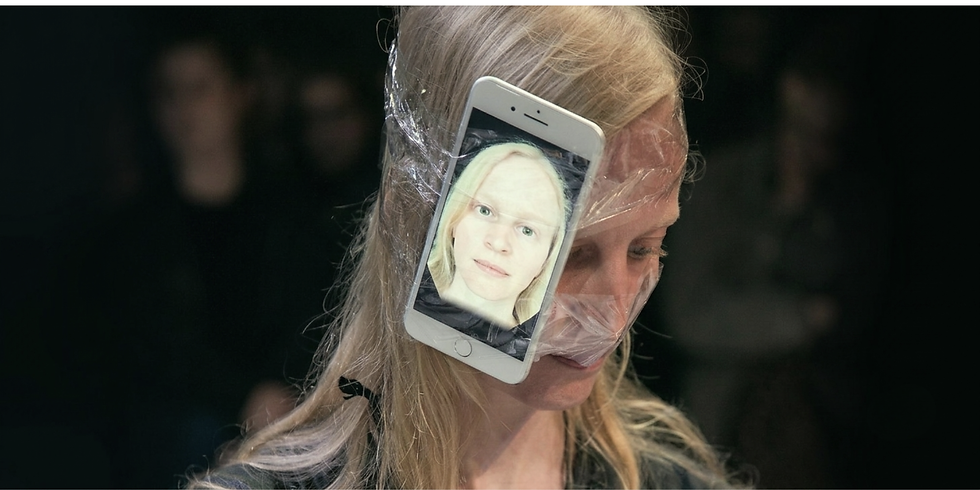
As our screen time climbs, so do the stifling standards to which we hold ourselves. Is it any wonder, then, that cosmetic interventions are more accessible and popular than ever?
After six years spent living in quiet comfort among the greystone dwellings and crisp, often frigid air of Chicago, I recently decided to uproot myself in favor of greener, warmer pastures. Having grown up in a rigidly conservative, small Midwestern town, my sights had always been set on graduating to The Big City(™), where I could immerse myself in culture and surround myself with like-minded creatives. I’d already done the NYC thing in my early twenties, and now, I’d done my time in Chicago. Living in two of the country’s three largest cities before hitting my thirties: check.
Los Angeles, then, in all of its verdant, sun-drenched glory, was beckoning—the last, and arguably most beautiful, of the Big 3 for me to conquer. So, I packed my bags, rented a minivan, and drove cross-country to my new home in Hollywood, aware of the stereotypes that plague it, but optimistic nonetheless. If I couldn’t avoid it altogether, I told myself I could at least deal with the rabid vapidity of influencer-slash-celebrity culture, so long as it remained on the periphery, and so long as the rolling, bougainvillea-draped hills and the glittering Pacific waves were there to soothe me.
I’d love to claim these last seven months in La La Land have brought me nothing save serenity and a surplus of Vitamin D, but it would be dishonest. Los Angeles is fabulous, really, and provided it doesn’t crumble into the sea anytime soon, I could see myself living here for decades to come. But beneath the perpetually cerulean skies lies something… Toxic. And I’m not referring to the smog problem. Rather, I’ve found that, despite all my previous visits and preconceived notions, I was still woefully unprepared for full inundation into this Uncanny Valley-esque matrix.
The regularity of unnatural, unnecessary aesthetic interference, the insouciance with which such procedures and products are met, has been startling to witness. After only a few months of exposure, the prevalence of “self-optimization” and “looks-maxxing” culture here triggered an “AM I F*CKING UGLY!?” meltdown that left me sobbing in the bathtub for hours. Tears streaking my porous, peachfuzzed cheeks, snot bubbling out of my prominent aquiline nose, I could feel my grip on reality slipping—it seemed as if no one, myself included, could remember what natural, unaltered faces and bodies look like. Initially, I was eager to blame my new surroundings, to use the city and its injectable-loving inhabitants as scapegoats. But of course, once I took the time to cool off and zoom out, I was able to reconcile this face-and-figure-obsessed phenomenon as neither new nor unique to Los Angeles. I recall reading and nodding fervently along to Jia Tolentino’s article “The Age of Instagram Face” in the New Yorker in 2019—my first year living in Chicago—and though the subject matter remains evergreen, it’s safe to say the aesthetic ante has been significantly upped since then.
Obviously, this generation is infatuated with frivolous cosmetic procedures. One could venture that the obsession is a knee-jerk response to an increasingly hideous, ever-deteriorating world—I mean, look around. Earth is quite literally burning. Innumerable innocents are being slain as a result of wicked war-mongering and government-funded genocide. The planet’s most prominent political figureheads are flaunting their pedophilic preferences with impunity. Surely in such a grisly, nihilistic age, it's natural for people to turn inward. The world may be an ugly, brutal thing, but the self? That can be optimized, or so we're told—and sold. The platitude "control what you can control” comes to mind here.
This pursuit of aesthetic perfection, however futile, could be serving as an individualistic defense mechanism, a deflection of sorts. If everyone is so beautiful—smoothed and symmetrical and softened beyond recognition—can the world really be so obtuse, so… ugly? More likely, though, it’s a distraction, one whose effectiveness relies on this very futility. If flawlessness is forever out of reach, the quest for it will be unending, and the instinct to look outside oneself will be dimmed, if not extinguished altogether.
Perhaps I’m being too generous, and this philosophical outlook is a steaming pile of bullshit. Maybe the explanation for such a self-obsessed culture is as simple as this: in an increasingly technological age, we all spend too much time staring at and thinking about ourselves. Social media is a strange, omnipresent beast—one that rots our brains from overuse while tacitly suggesting we cease to be should we refuse to engage with it: if we don’t exist online, we don’t exist at all. Most platforms are hypervisual, forcing us to face our own reflections and others’ with ridiculous frequency, thus inviting unprecedented levels of appearance-based scrutiny. So-called “flaws” that would likely go unnoticed in the pre-iPhone era are now glaring, and anyone with login credentials can point them out—often cruelly—leaving hostile comments under the guise of relative anonymity. The converse, then, is also true: those the internet deems attractive are generously rewarded with praise and positive engagement galore. Increasingly, it feels as if beauty is less so in the eye of the beholder and more so in the hands of those doling out likes, comments, shares, and follows.
Furthermore, it seems the very definition of beauty, something that is supposedly subjective by nature, is shrinking, being measured more by an absence of flaws than by an assortment of idiosyncratic features or a uniquely enchanting aura. As Tolentino so keenly observed in the aforementioned New Yorker essay, the dominant beauty ideal nowadays, colloquially referred to as “Instagram face” or “iPhone face,” cherry-picks the most desirable traits from various ethnicities—“an overly tan skin tone, a South Asian influence with the brows and eye shape, an African-American influence with the lips, a Caucasian influence with the nose, a cheek structure that is predominantly Native American and Middle Eastern—” to create an ethnically ambiguous, alien visage, one which rarely exists in nature and is largely unattainable without injectable and/or surgical intervention. Innumerable celebrities and influencers—such as Bella Hadid, the Kardashian/Jenner clan, Emily Ratajkowski, etc.—are widely hawked as aspirational beauties because they boast such desirable attributes, though they weren’t born with them. It’s common knowledge that these women have spent exorbitant amounts of money and time under the knives of some of the world’s most renowned plastic surgeons—and yet, regular women are still expected—by men, by relentlessly demanding algorithms, and, most depressingly, by our own internalized biases—to adhere to such lofty criteria.
That same logic, or lack thereof, also applies to body standards, which maintain that the slimmer the physique, the better. Not to rail on Miss Hadid, but her freakishly low BMI being dubbed aspirational and/or attainable for the average person is alarming, to say the least. Gone are the body-positive days of the twenty-teens, which, while often performative and annoying (I will die on the hill that “All About That Bass” is among the most obnoxious songs of all time), were still preferable to the current algorithmic onslaught of anorexic-slash-orthorexic influencers masquerading as “wellness coaches,” despite their only qualifications being ultra-sharp clavicular bones and prominent thigh gaps.
The astronomical surge in GLP-1 usage for cosmetic weight loss is no coincidence. The number of ads I’m digitally force-fed daily—most of which star a svelte, athleisure-clad white woman encouraging me to shed ten pounds in two weeks via one drug or another—is as infuriating as it is harrowing. I mean, give me a break. It all hearkens back to the body standards of the early aughts—when I was coming of age—and when being rail-thin was all the rage. However, I’d argue it’s even more pernicious today, as we find more creative ways to market voluntary malnutrition as self-care. According to the American Medical Association, spending on semaglutides such as Ozempic and Wegovy rose more than 500 percent from 2018 to 2023, from $13.7 billion to $71.7 billion, with Ozempic-specific spending skyrocketing from $410 million to a startling $26.42 billion. Another report from CNBC states that GLP-1 prescriptions rose a staggering 300 percent from 2020 to 2023, totaling nearly nine million, while data analyzed by Trillian Health, reported on by CNN, shows that one-third of Ozempic patients do not have any history of Diabetes, the treatment of which was the drug’s intended purpose.
It feels rudimentary to note that women and girls are, and always have been, held to higher beauty standards than our male counterparts. I mean, duh—Feminism 101. From the time we’re toddlers, taught to pedestalize princesses and frilly femininity, it’s implied, if not explicitly stated, that beauty is power, an invaluable form of currency, the only womanly weapon worth wielding, its pursuit paramount.
Nowadays, this pursuit feels unprecedentedly urgent because as our screen time climbs, so do the stifling standards to which we hold ourselves. It’s all a vicious, dysmorphia-inducing cycle. Is it any wonder, then, that cosmetic interventions are more accessible and popular than ever? Though it’s strangely difficult to nail down precise statistics on the subject—most are suspiciously sourced directly from plastic surgeons’ offices—it’s apparent to anyone with eyes and/or internet access that there’s been an increased demand for such procedures. In fact, the American Society of Plastic Surgeons cites social media as a primary catalyst for the industry’s exponential growth:
“‘First, the overall popularity of procedures is increasing,’ said Ramanadham. ‘Social media is making plastic surgery more acceptable and helping to get rid of some of the negative stigma traditionally associated with it. Additionally, the demographic is changing with younger patients looking into various procedures and thinking about plastic surgery, especially nonsurgical, as part of their overall wellness. Finally, we see a direct relationship between procedures that are trending on TikTok and what patients are coming to the office for.’"
Considering approximately 55 percent of TikTok’s users are under the age of 30, well… I’ll let you do the bulk of the math here, while proffering another startling statistic: per the NOW Foundation: 45.5% of American adolescents report considering cosmetic surgery in recent years.
All of that said, I empathize with the impulse to “alter one’s avatar,” as such interventions are so often and so cavalierly referred to. I truly do. To claim I’ve always been immune to such propaganda would be a bald-faced lie. Though it has long-since dissolved, I had an $800 vial of Restylane Kysse pumped into my lips in 2021, for no better reason than everyone around me was doing it, and “Maybe,” I thought, “this will finally be what takes me from an eight to a ten.” Spoiler alert: it didn’t. In fact, aside from the immediate post-injection swelling that left me slobbering on myself like an infant, it scarcely made a visible difference. Even my eagle-eyed mother couldn’t clock the change. Plumper pout or not, the visit did accomplish something, in that it made me painstakingly aware of other “imperfections” in need of remediation. If you’ve never had to examine your reflection beneath the blinding lights of a med spa while an impossibly smooth-skinned aesthetician points out everything they’d change about your face—asymmetry here, sagging there—consider yourself lucky. I didn’t even know what nasolabial folds were, or that they were considered an aesthetic affront, until they were so harshly highlighted to me.
Since that fateful day, I’ve had a few lip-flips, plus one poorly injected bout of TMJ-related Botox that cost me $850 and left me with a bulging masseter. And though I’ve sworn to myself I’ll never pull the rhinoplastic trigger, I’ve caught myself googling “affordable nose job near me” more than once (typically in the throes of PMDD-induced fugue states). Critically, though, my participation in all of this does not equal endorsement. I do not think any of this is good, healthy, or wise. Without delving too deeply into my personal medical history, it makes sense that I’d be susceptible to such patriarchal ploys. As someone who has suffered from and undergone intensive treatment for an eating disorder, resorting to extreme measures to “fix” my corporeal form is, unfortunately, all too familiar. Really, I’m an aesthetician’s ideal victim—crippling dysmorphia plus unfettered perfectionism is one hell of a cocktail. I never thought I’d be glad of my relatively low income, but in hindsight, a lack of spare cash in my mid-twenties prevented me from making impulsive alterations I know I’d regret today.
Before I trudge any further into contentious territory, allow me to offer a disclaimer: I do not consider women who have plastic surgery, use semaglutides, etc., to be The Anti-Feminist Enemy. As I said, I understand the impulse and the stakes—we live in a patriarchal society that insists upon women’s desirability. Don’t hate the player; hate the game. But still, the enthusiasm with which all of this is being peddled and the lack of critical thought surrounding it trouble me deeply. It’s heartbreaking that we as women are so eager to erase and mutilate ourselves for the sake of catering to whatever beauty standards happen to be trending—standards which, by and large, most of us had no say in creating.
Let’s use cosmetic rhinoplasty as an example: have you ever heard of someone emptying their savings to enlarge their schnoz? While I’m sure there are a few exceptions, most nose jobs prioritize shrinking, slimming, and lifting, often with the intention of achieving a perky little ski-slope silhouette. Thus, when one decides to undergo such an operation, they’re implicitly agreeing that smaller noses are preferable, which, in turn, bolsters the unfair (but not untrue) notion that smaller noses hold more societal value—a belief that is not-so-inconspicuously rooted in racial and ethnic superiority. That’s not to say anyone who gets a nose job is racist by default—that’d be ludicrous—but the societal undercurrents and Eurocentric preferences that influence the decision certainly are.
It’s also important to note that, when discussing beauty standards, the word “trending” does a lot of heavy lifting: like most fads, aesthetic ones are mercurial. One year, voluptuous Coke-bottle bodies and juicy BBLs are flooding your social media feed; the following year, it’ll be overrun with nonsense terms like “yoga boobs” or “leggings legs,” which begs the question: is the high cost—both monetarily and physically—of enduring such invasive, often irreversible procedures really worth the gratification rewarded for adherence to a fickle trend? As horrifying as it may sound, sometimes, the answer is yes—pretty privilege, like white privilege, male privilege, and class privilege, is real and prevalent. The social rewards bestowed upon hot people are easy to spot—e.g., an abundance of friends, followers, lovers, and freebies—but the economic advantages afforded them are less obvious. Several studies have indicated that conventionally attractive people are more likely to be hired, receive promotions, and earn more money than their less attractive peers.

Occasionally, pop culture hints at an iota of consciousness, rightly criticizing the dystopian nature of (gesturing broadly) all this. A prime example is the critically acclaimed, Oscar-nominated horror film from 2024, The Substance, wherein Demi Moore stars as an aging celebrity who, desperate to cling to her stardom, begins abusing an illicit drug that births a younger, hotter version of herself, a more aesthetically pleasing alter ego (played by Margaret Qualley) through whom she can relive her glory days. Long story short, the experiment goes horribly awry, though I won’t spoil it by providing any further (hint: gorier) details. Summarily, the film is meant to spark a dialogue about the immense societal pressures and sexist standards that plague women today. It’s a fantastic movie, no doubt worthy of the accolades it received. However, the moral of the story seems to have been lost on the two lead actresses, evidenced by Qualley’s subsequent (alleged!) boob job and Moore’s subsequent (also alleged) GLP-1 use, which left her looking skeletal on the 2026 red carpet. So it seems Hollywood’s shining moment of self-effacement and the optimism it inspired was nothing more than a flash in the pan.
While I’m sure many find that specific instance, as well as our beauty-obsessed culture more broadly, unnerving, people seem increasingly reticent to discuss it. Beneath every photo of one emaciated actress or another—depressingly, this list of names is ever-expanding—you’re guaranteed to find users expressing their concern, genuine or otherwise. You’re equally as likely to behold a barrage of defensive comments, imploring people to “stop commenting on women’s bodies!” As well-intended as the latter approach may be, it does more harm than good in the grand scheme of things—we all know problems won’t go away simply because we ignore them.
Why is it, then, that such idle responses have gained momentum? Is it because people genuinely don’t see the issue with women whittling away to nothing, or forcibly altering themselves beyond recognition? That may be true for some, however difficult to comprehend. By and large, though, I think we have “choice feminism” to blame for this pervasive passivity. In the words of every gender studies professor who has ever lived: let’s unpack that.
Choice feminism, occasionally referred to as post-feminism, has become a mega-hot topic over the last decade. Succinctly defined, it’s the belief that any choice a woman makes is inherently feminist because she chose to make it. This ideology can be attributed to the more marketable, mainstream variations of third-wave feminism spawned in the 90s and early 00s—think Spice Girls’ hot pink, glittery “girl power” motif, which prioritized individual empowerment and sexual liberation—as opposed to the more stringent, more urgent second-wave movement, which strove for basic legal and economic equality, reproductive rights, etc. Nowadays, American women can be anything—gatekeepy girlbosses, TikToking trad wives, Percacet-popping podcasters, cultish Pro-Ana vloggers, lobotomy-chicified bimbos—and all will be met with exclamations of “slay mamas!” and “yassss queen!”, no matter the detrimental effects such decisions may have on women or society’s perception of us, writ large. Don’t get me wrong, I believe women should have the right to make our own choices, period—but I also believe we reserve the right to criticize one another’s choices without being pigeonholed as “regressive” or “anti-woman.” In the past, for example, when I've expressed dissent re: plastic surgery, I've been pummeled with baseless accusations from other women; I’ve been called a “pick-me,” “not a girl’s girl,” “jealous,” “too woke,” “rad-fem,” “hater,” and, most ironically, “an ugly bitch.” Such reactive dismissals, usually uttered in the name of choice feminism, serve more to infantilize women than to liberate them, suggesting women are incapable of fielding criticism or engaging in thought-provoking discourse without becoming hyper-emotional, petty, or defensive.
Mind you, it’s not like I’m out here spewing misogyny to invoke such vitriol, saying things like “all these chicks with filler face are busted bimbos.” Rather, I’ve been urging others to approach these matters with a healthy amount of skepticism. I don’t think it’s radical to suggest we, as women, could afford to love ourselves more, nor do I think self-love is something that can be bought. The latter sentiment really riles folks and is invariably rebutted by the insistence that women elect to undergo these procedures of their own accord, for their own benefit—but I’d like to push back on that, too. When we convince ourselves that the choices we make are for our own sake, we don’t have to think too deeply about whom or what those choices actually serve, and thus we feel less guilty about succumbing to patriarchal pressures. “I got my XYZ done for me!” is a quick, widely accepted retort that shuts down any room for analysis, but it’s a fool’s errand to believe that the choices we make exist in a vacuum.
The insecurities which cosmetic procedures or semaglutides aim to ameliorate did not arise out of thin air—somewhere, somehow, we were made to feel unworthy, unpalatable. For example, let’s revisit my short-lived affair with lip filler. At the time, I’d strutted into the plastic surgeon’s obnoxiously ornate office with an eager, albeit anxious smile, having successfully deluded myself, claiming the nearly 1,000-dollar pursuit of suppler, juicier lips was no one’s idea save my own, despite the encouragement of a man I was seeing, who so selflessly volunteered to pay for it. Also lingering in the recesses of my mind was a snide comment a girl had made to me in junior high, something about my having “bird lips” and a big nose—two attributes I’d never felt insecure about until that moment. I’d also been told my boobs were too small, my arms too hairy, my thighs too bulky, my face too square, etc., all things which have been reiterated over the years via social media and pop culture, more generally. This isn’t a “woe is me” moment—I neither desire nor expect pity for sharing these things—but it is a relatable moment, because it’s safe to say every woman, everywhere, has had her appearance dissected and disparaged at some point. Having insecurities thrust upon us—directly or indirectly—is a universal experience. That said, I doubt any of us would be compelled to break and rebuild our noses or suck the fat from our cheeks if we lived alone on a desert island, which really calls the notion of “choice” into question. Not to go all Andrea Dworkin on you all—I recognize that she, like all of us, was an imperfect feminist—but she was spitting when she wrote, "Being female in this world is having been robbed of the potential for human choice by men who love to hate us. One does not make choices in freedom."
My issue with choice feminism isn’t just that it's intellectually lazy—it’s more nefarious than that. As it is wont to do, capitalism sank its fangs into the feminist movement, draining what was once a serious political ideology of its potency until it became mild enough for mainstream consumption. Feminism, then, became less of a loud-mouthed, hairy-legged pariah and more of a bedazzled, Barbie-pink buzzword. At first glance, the popularization of progressive politics seems like a net positive. While it may be irksome to devout ideologues to see their beliefs reduced to cheap merchandise, at least more people are talking about it, right? To some degree, sure. However, while representation can lead to progress, it is not progress in and of itself. Shockingly, the selling of “smash the patriarchy” mugs at trendy retailers has not, in fact, resulted in a smashing of patriarchy. Starting political conversations is important, of course, but it’s a first step at best—and when paying lip service is the extent of one’s activism, one cannot expect a raucous upheaval of the status quo, which is precisely why reigning institutions insist upon its sufficiency.
Likewise, the existing hegemony cannot, and will not, be toppled by a hyper-individualistic, neoliberal agenda, such as that which choice feminism fosters. Choice feminism does not simply pedestalize the individual—it eschews the collective entirely—asserting that any win a single woman experiences is a win for women everywhere. Sure, a syringe of Sculptra here and there might boost a woman’s confidence, but the ensuing dopamine rush she experiences should not be conflated with empowerment—a word that, like feminism itself, has been thrown around much too liberally, reclaimed and repurposed by the very institutions that prey upon and profit from our insecurities. Alas, one woman’s Instagram-approved glow-up is not the key to liberating marginalized communities. Who knew?
As choice feminist rhetoric forsakes the collective, it also, by default, forsakes intersectionality—a crucial development in feminist theory coined in 1989 by Kimberlé Crenshaw, who described it as “A prism for seeing the way in which various forms of inequality often operate together and exacerbate each other.” Meaning, when it comes to matters of gender inequality, one must also consider how factors such as race, class, sexuality, etc., interlock and contribute to oppression. I.e., there are levels to all this. The choice feminist camps claiming surgical makeovers and rapid weight loss are acts of empowerment do not only fail to understand the definition of empowerment, but—even if abiding by their own disjointed definitions of the word—they fail to consider the wide swaths of women who cannot afford such alterations, which, in addition to the hefty price tags they boast, require ample free time to pursue (especially when post-op recovery is involved). To say there is a gaping racial and class divide in the industry is a gross understatement, as 78% of plastic surgeries in the US are performed on caucasian women. That doesn’t necessarily mean more marginalized sects—queer women, women of color, women of lower socioeconomic status, etc.—are immune to the looks-maxxing marketing being shoved down their throats. Instead, it increases the likelihood of them seeking out dangerous, discounted procedures, often performed by underqualified or inexperienced aestheticians, or participating in medical tourism, which is shady at its best and deadly at its worst. Insofar as women are literally dying to appeal to society’s aesthetic demands, I’d say we’ve taken the adage “beauty is pain” much too seriously.
If you’ve read this far and you’re still thinking along the lines of "chill, it’s not that deep," there’s probably little else I can say to change your mind, which is fine. Go off, I guess. But in a world chock full of uninspired AI slop, wherein fast fashion reigns supreme, and social media has reduced what was once personal style to neatly packaged, purchasable aesthetics or “cores” (e.g., ballet-core, cottage-core, coquette-core, etc.) that encourage widespread uniformity, uniqueness is scarce and, therefore, increasingly covetable. Frankly, uniformity in fashion is dreadfully dull—imagine how fucking boring the world would be if everyone’s faces suffered the same homogenous, hollow fate. Not to be a doomer, but at this rate, that path of soulless sameness is the one we’re careening down.
If, on the other hand, you’re thinking, OK, so what is to be done about all of this? Truthfully, I don’t know. This is, after all, a frustrated, long-winded rumination, not a manifesto; and if there were a clear-cut path to women’s liberation, it’s safe to say someone much wiser than I would have discovered it by now.
What I do know is that this iPhone-induced psychosis is not for the faint of heart. I’m struggling with all of this as an adult with a fully developed prefrontal cortex and years of therapy under my belt—I cannot fathom being an impressionable teen with internet access in this era of artifice and emaciation. I thought 2013 Tumblr was bad, but the thinspo blogs of yesteryear pale in comparison to what we’re seeing today; at least they called a spade a spade, a bone a bone, a Botox syringe a Botox syringe. The toll all of this is taking on the collective psyche is surely immeasurable, ensorcelling us to look at dying, plasticine women and cheerfully agree that they are healthy. And while I’m neither qualified nor equipped to prescribe a universal remedy, allow me to inject you with an invaluable piece of advice that has helped me more than anything:
Girl, log off. 🌀
Gabrielle A.D. is an LA-based writer attempting to live as authentically and as lesbianly as possible. She can be found on Instagram @infinite__breast, where she occasionally shares more of her work, though she often deletes social media and goes off-the-grid for the sake of her tenuous sanity. She also highly recommends Bricking one’s phone (this is not a paid sponsorship) and going outside.


