
The Knitwear Designers Stitching New Futures
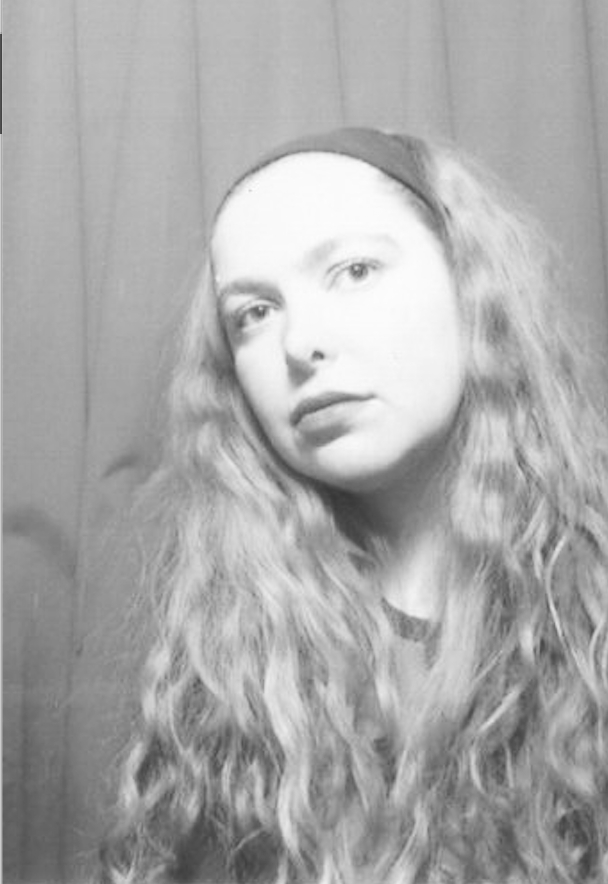
Against the rising tide of AI, four knitwear designers speak about the joy, craft, and ritual of tactile art.

Nothing gets between you and your knits. Well, maybe a few underpinnings and layers, but for knitwear designers, what’s more personal than building a wardrobe with their own two hands? Knitting allows one to construct a textile and, in turn, a garment that allows one to become the body in their “body of work.”
Speaking with four knitwear designers, ranging from professionals to hobbyists, writer Hannah Black aims to untangle the threads among self-expression, self-care, the body, the domestic, creativity, craft, hobby, and perfectionism in the age of AI.
This interview was conducted via e-mail in March 2026 and has been edited for grammar and clarity.
Hannah Black: How did you learn to knit? How long have you been knitting?
Amelia Gillis: I had a roommate when I was 21 or 22 who taught me how to cast on and knit (just the knit stitch, I wasn’t ready to purl yet). After we moved out of our house, I didn’t have any materials of my own, so I pretty much lost that knowledge. I taught myself to crochet at 29 after getting a WFH job. I’m a physical person; I like to move. Working from home is great in a lot of ways, but it does make me restless, so keeping my hands busy helped. After about a year of crocheting, I felt up to the challenge of reintroducing myself to knitting; this time with more focus. It’s been three expansive years, I’m obsessed.
Ciara Joy: I learned [by] watching a lot of YouTube videos in slow motion and on repeat. I have memories of my grandmother trying to teach me when I was a kid and not having the patience... I learned to sew in first grade and always knew I loved making clothes, but knitting never really factored into my imagination as a real way to make anything other than sweaters. So much has changed!
Michelle Nia: I learned to knit in school and also by going to a knitting club with my mom as a child. I was instantly in love. The first thing I made was this fuzzy white scarf that had rainbow pompoms intertwined with the yarn. I remember it so well, but it's long gone now. I've been knitting on and off ever since.
Hannah Siegfried: I taught myself how to crochet in spring 2022 after my friend Amelia took it up. [I] mostly [taught] myself by watching YouTube videos. After I got the hang of crochet, I wanted to expand to knitting, so I got one of those circular Sentro knitting machines in winter 2023-2024. I don't know how to knit properly yet, as I've been able to do everything I want to do with the Sentro so far, but I will probably learn how to actually knit at some point!
HB: What does your practice look like? Do you use a machine or any form of technology to create garments? Do you go into a studio/work in a specific area of your home?
AG: I tried getting a hand-crank knitting machine, but it felt like more hassle than it was worth. I love a good tinker, but I felt awkward and disconnected from the work. I like the gradual, tactile nature of hand-knitting. I like to learn that way. I’m a double earth sign, and I think that manifests through my hands. When I bake, I’m usually using my hands to form a dough or a crust. When I shop for clothes, I shop largely by touch. In terms of tools, I use a notebook to keep measurements, plans, rough sketches, and math I do by hand. Solving for x is tea! It looks cute on the page and keeps me sharp.
I’m a writer, [and] I’ve kept a diary since middle school. Now that I’m older, I have a planner, a to-do list notebook, a diary, and a knitting notebook. Physically writing things and seeing [them] on the page is essential to me; otherwise it’ll float away with all the other balloons of things I can’t remember.
CJ: I like to knit by hand and with a machine. I find working with the machine more fun, engaging, and challenging, but hand-knitting is very grounding and restorative. Most of my time on the machine the last couple [of] years has been in production for other people, but I try to keep a hand project going in the meantime. That will usually live in a little silk lingerie pouch bouncing from purse to purse for months on end, letting myself have something to pick up without much expectation on the result or timeline. When I'm working by hand, I almost exclusively use the straight bamboo needles (I'm so bad at working in the round), usually in a larger gauge because I'm still a bit impatient, and freehand it in pieces, leaning on my sewing background to build it out. These steps keep the process as simple as possible in my mind, so I stay unbothered in the long process before a final result. The machine I have at home is a chunky domestic flatbed (SR150) that is much older than [I am] and has certainly seen better days... It lives on my desk in my tiny bedroom, surrounded by an irrational amount of yarn. When I need a crisper, more reliable experience for a project, I am lucky to have access to other machines in community studio space [or] friends' studios when they're not in use.
MN: I prefer to knit by hand, but I also love playing with my knitting machine. I like to combine different mediums when making something. Sometimes, starting a project on the machine and switching to needles or vice versa.
HS: Yes, I use the Sentro machine when I want to knit something! I usually crochet or knit in my living room so I can sit at a table for the knitting machine, but sometimes I will crochet or sew my knit pieces together on my bed if I want to switch it up and be in my bedroom.
HB: What does the perfect time to knit look like? Would you wear a specific outfit or fragrance when getting into the kitty gritty? How does the fantasy of the “perfect time to knit” differ from the reality?
AG: The perfect time to knit is when I feel like knitting! My favorite place to knit was in public when I lived in New York, usually on the train. Like most train activity, no one usually cares or pays much attention, and you can get a lot of progress done on your morning commute. The best was when someone would take an interest in my project and I could have a nice little moment with a stranger. Once I was knitting outside a cafe and a girl walked by and said, “Exactly,” in her stride. Like, exactly!!! It’s so inspiring to have those interactions with people, even in passing. A guy actually gave me his business card once because he wanted me to give him knitting lessons!
I loved watching other people knit in public, even if I didn’t have my project on me. It’s mesmerizing. Everyone has their own way; I love seeing different hand placements and techniques and color choices.
CJ: I have very different answers between [using my] machine [versus] hands. My perfect hand-knitting scenario is as cozy as possible, with a nice beverage, some music or Housewives, and a good yarn that I can look forward to touching for a long period of time. I'm imagining my mom's old painting hoodie, no pants, leopard print blanket, "stress" incense, and a bit of my jasmine essential oil room spray. [A] perfect machine-knitting scenario is lots of free time ahead, a sturdy chair with a good back, lots of caffeine, and a loudspeaker. Sometimes it's meditative, and sometimes it feels like a high-speed chase... I'm usually working with others when I have machine access these days — so pants on, but comfy — and a top that won't get me stuck in the machine... The best time to knit is whenever I get the chance, in reality, but there's definitely a perfect cocktail of motivation, inspiration, attention span, and easy access somewhere in between.
MN: I knit whenever I can. At home, I turned a portion of my living room into my studio, and it works nicely. Normally, I like to knit in the morning if I have time, but often it will be at night. I'll light some candles, put a show or movie on, and just chill. But in reality, most of the time I'm knitting, I'm surrounded by a mess of yarn and tools.
HS: Anytime I'm feeling really inspired to work on a piece! Whenever I'm excited about something I'm making, I naturally gravitate towards spending my free time working on it. Bringing to life a garment that I imagined in my head helps me bring my fantasy world to fruition in reality, so I see it more as a bridging of both worlds. I definitely like wearing cozy clothes so I can be as comfortable as possible, especially when working with the knitting machine, as the movements for that can be really repetitive and hunched over.
HB: How does the process for a garment begin? What guides your choice of material? Does the textile/tactile feel inform your design process, or does design beget the material type? Are there any particular techniques you enjoy employing?
AG: The planning has always been fun for me - making gauge swatches, measuring, math, etc. It helps me visualize the finished product (though I do accept that nothing I plan will ever look exactly like I envisioned). After that, I mainly feel out a color or texture scheme that seems cute or appropriate for the project. The weight has little to do with my choices unless I’m following a pattern. I usually do this as I go, especially with scrap projects, which are my favorite!
CJ: I almost always decide what I want to make based on the materials I have on hand, and then if there's a technique I want to practice or something I've been feeling is missing from my wardrobe, I'll shape the results from there. I only use either repurposed materials or natural fibers, and depending on the texture of the yarn and the knitting methods I have access to, I'll decide if it's best for something wearable or more decorative. I definitely feel very inspired by textures and excited by the variety you can play with when making your own textile; there's so much room to experiment. I'm also very interested in transformation and repetition when I'm feeling inspired, so drawing from things I see in my everyday, shapes and spaces and textures, and imagining them translated into something knit.
MN: When I get an idea for a knitting project, I immediately start thinking about what yarn I'm going to use. To me, the material is the most important and is what really makes something special. I love finding vintage or discontinued yarn online, and I've also been experimenting with dyeing my own... It's so fun.
There's an emotional layer to the things I make, too, which reflects my own life. The clothing has a secret story.
HS: The process usually starts with the colors and textures of the yarn I pick out. I decide if I want to use certain colors together or use just one color of yarn, and [letting] the thickness of the color(s) I've picked help guide the shape or style of garment I want to make. I'm also really lucky to get all my yarn now from the thrift store where I work, but it can be hard to know the exact make of the yarn I pick. As for the designs of garments, if I don't immediately envision something in my head, I’ll look through my likes on Poshmark or Instagram for silhouette inspiration. I also love combining both knitting and crochet in one garment. I make all my garments freehand to fit my body and don't follow patterns, which makes the process kind of like a fun puzzle.
HB: Do you usually go into a new knitwear project with a goal of progress to accomplish? How much of creation is relaxation and repetition, and how much feels like a product is the end result? Is it unwinding or is it work?
AG: I was a competitive figure skater growing up, and one of the biggest things I took away from that time was learning how to have fun doing the same thing over and over. Performing at a competition was nerve-racking and scary. But the months, sometimes years, developing that program repeatedly in preparation for hours a day, changing little things here and there, and having fun exploring was what brought me the most joy.
The product is the end result, but that is just one aspect of it. That’s the conclusion, which to me is far from the point. The act of creation is more valuable and satisfying than the finished result. It’s work, there’s no denying that. But the goal is to find the play in that work, to find difference and opposition in repetition. All of that is there to appreciate. The fact that it is work and you make time for it and show up is the fun part.
CJ: I try to learn something new or practice a skill with every new project, even if it's something really small. I rarely set big goals for myself in knitting unless it seems entirely feasible because I like to be as free with knitting as I can. I put a lot of pressure on myself in so many other parts of life, so in order to have this be a part of my life for as long as possible, I've been trying to keep the practice a bit protected. I like learning new techniques, but because I'm self-taught, there's always lots of catching up to do. I mostly find knitting relaxing and restorative, letting myself enjoy the process and taking my time, knowing that so many moments and so much work [go] into anything knit. What I love about knitting is also how it's so forgiving. A lot can go wrong, but also a lot can be recovered between the time you start and having a finished garment.
HS: I like trying new silhouettes or putting garments together in a new way with everything I make. That doesn't mean I won't make the same silhouette twice; I just think it's more fun for myself to continue to try new things and test my limits of what I can do. It also makes every piece super one of a kind, which is fun. Because I'm always kind of switching it up in that way, and again because I generally gravitate toward making things when I'm inspired. Making garments hardly ever feels like "work." There’s some kind of unknown force (probably just creative energy) that gets me through making each piece. It doesn't necessarily feel like unwinding, either, though. I definitely have to take a break from making things sometimes to truly rest and recharge.
HB: How does knitting intersect with your occupation or other creative outputs?
AG: I work in luxury retail, so I’ve been able to research fabrics and garment construction as part of my job. It’s made me a more exacting knitter, a better planner, and a know-it-all when shopping, lol. Knowing how certain fabric behaves solves a lot of issues I would have otherwise had to learn through trial and error.
HS: As I mentioned before, I work at a thrift store. It's a nonprofit creative reuse thrift store focusing on arts/craft supplies and bringing materials back to the community. Everything in the store is donations-based, so all the yarn I get is second-hand, which I love. Sometimes we get really nice quality, unique vintage yarn that you can't find anywhere else, which is super interesting and inspiring! It's also fun to meet people who come in to donate or shop wearing stuff that they've made and chat with them about that process. I’m also a photographer, so I love documenting myself in the stuff I make and finding different ways of doing [self-portraits].
HB: How does knitting factor into your self-care practice? Do you see knitting as a healing, meditative practice? Is there a layer of perfectionism to combat in the process?
AG: It’s therapeutic. It lets my mind wander while keeping me focused and sitting still, something I have a hard time doing. It does heal me, even in those perfectionist moments. It’s all in the pursuit of beauty. The activity while resting. The repetition, the counting, the recounting. The doing and undoing. If you knit, you purl. You’re showing up at every angle, and somehow it calms you down. Sensational!
CJ: I used to be better about dedicating in-between moments to hand-knitting. It was always very grounding and helpful for me. Knitting is such [an] amazing exercise for your brain, and I definitely feel a difference when I am more in the groove of things... Again, I love how forgiving the process is because it helps remove that layer of perfectionism to some degree... I spent ten years only making clothes with the cut-and-sew process, which is its own incredibly complex and interesting world of crafting, but it required a level of precision and structure that I noticed turned me off from creating a lot of the time. I am very grateful to be able to try things out for the sake of trying them, making sure that I'm putting care into what I'm doing and avoiding pressures [of prioritizing] producing [over] creating for as long as I can.
HS: Getting to make something that I want to wear is definitely a form of self-care. I've always been very sure of my style, so being able to create things from my imagination that no one else is going to have is very healing and fun for me. I definitely have perfectionist tendencies, but because knitting is tactile, and I've never felt super gifted in making things with my hands, I've found [a bit] of acceptance that each piece isn't going to be perfectly made. [Imperfection] adds a little magic and uniqueness to each piece anyway. I feel like my perfectionism lies more in how the garment ends up fitting over if it's perfectly constructed. Since [most of my projects] are for myself, I'm pretty forgiving if there's a hole somewhere or something. That’s mainly why I don't really like making pieces for other people. I would go crazy trying to make the garment perfect and get anxious about it not being well-made enough.
HB: What does creating slow garments and tactile experiences mean to you in the digital age? Does crafting feel particularly poignant alongside the era of AI? Do you think knitting as a trend is indicative of our culture’s swing towards physical media? Is it a way to move forward/fix attention spans/create community?
AG: Working with your hands is a skill everyone should learn, regardless of technological advances. I believe that it’s a positive step forward... Those who take the time to learn a skill will always be able to pick it back up in some capacity; it will always be there.
Start a club! Talk to people! Hang out! This is how to shift our attention toward community. Learning something as complicated as knitting or crochet means you may need help. AI is not going to help you correct your dropped stitch five rows back.
CJ: I think it's incredibly important. Having a way to slow down and be with your mind and body while also doing something that brings you joy is invaluable and something everybody should have access to! All creative outlets are important for connection, stimulation, exploration, learning, feeling... Being able to snap in and out of the big picture and really understand what goes into making something happen, stitch by stitch or however it may be, is essential when we're so flooded with constant consumption / instant gratification / same day delivery / short form media, etc. [It’s important to] remember the fact that everything around us requires energy, water, labor, materials, time, preparation, and thought instead of acting like things just appear out of thin air and onto a shelf... Crafting is, of course, an incredible resource for the mind and a way to connect with others, and has been for thousands of years! Whether it be out of necessity, for survival, or for leisure or pleasure or both, the creation of textiles and other crafts and handiwork [has] been and always will be a part of our lives, our homes, our communities.
MN: Creating in these times means a rejection of the fast-paced and hollow consumer culture we live in. It means creating your own world instead of letting someone else create it for you. I always think about the Lana Del Rey lyric, "No one's gonna take my soul away..."
HS: I love being able to make stuff for myself and being self-sustainable in that way for sure. I also love using second-hand and thrifted materials for my garments. I'm someone who is strictly anti-AI, so being sustainable and pushing for autonomous creativity is really important to me. I also have experience working in the fashion industry… work[ing] for an independent brand in NYC for 2 years. Even though they were making smaller batches of products and it wasn't fast fashion, I really saw the waste and lack of care that goes into the fashion industry. It pushed me to want more independence in the sources of the clothes I wear. As someone who thrifted for most of my life and still has many clothes that I thrifted 10+ years ago, I've always made sure to be as sustainable as possible in that way, and creating my own garments sustainably is just another facet of that. I definitely think the popularity of knitwear and crocheting on the internet is an indication of culture's swing towards physical media and nostalgia for something tactile and unique, and I hope it continues to move in that direction! The community that people create around knitting and fiber arts is super inspiring and encouraging to see, and I love feeling supported by other knitwear designers!
HB: How do you feel about sharing your work online/feeding the algorithms vs. protecting your peace/creating for creation’s sake?
AG: I don’t think about algorithms while in pursuit of my creative projects, and I don’t have much in common with people who do.
CJ: I think crafting and social media have become intertwined in so many ways [over] the last few years, but I feel the pressures particularly around using social media as a framework for starting a small business. It's clearly been an incredible tool for some people to be able to support themselves and share their work with the world, but I'm not sure it's the path for me, yet at least. I'm still trying to learn and play as a way to develop a skill and learn more about a technique that intrigues me, and I am indebted to social media for the community it has brought me in terms of learning. I wouldn't know how to knit or use a machine or do any part of this without social media! The machine-knitting community has grown so much in recent years, and social media played a huge part in reviving people's understanding of and interest in the craft. Domestic knitting machines weren't being produced or used much in the twenty-first century, but now there's such treasure troves of passing on knowledge and tips and tricks for such a finicky practice all over socials, and it's really sweet how much knitters can lean on each other in that world. I'm so lucky to have learned from so many amazing people and to be able to pass on what I've learned with friends new and old! I think it's a great way to connect with others and to connect with yourself, and I'm so glad I've found people and spaces to share that with.
MN: Sharing my work... I try not to put so much pressure on it now and look at it more like a visual diary. Letting go of expectations makes it easier. I've given up on the algorithm. I take my breaks and disappear for a while. I think that's important.
HS: As far as posting it online goes, I really just like posting what I like and what I make, and if other people see it and like it, that's awesome; if not, that's cool too. I've definitely had times where I've felt down, feeling like the algorithm isn't working the way I'd like it to, but at the end of the day, my friends and people [who] support what I make see what I post and are supportive, and that's all I care about! If more people discover me and my work, that's cool, but I don't necessarily need a huge audience or other people to like what I make. I've already decided that I like it. The reception or lack thereof from people around me doesn't really have an effect on how I feel about a garment. But again, if my intention was to create garments for other people to buy, that's when stuff like this would become a problem for me, because then I would be translating [engagement] as "Oh, this post didn't get much attention so I guess people don't like this design," and would start feeling bad about myself or put more pressure on posting. So I guess the point is I've freed myself from that pressure by just creating and posting for myself. It's my life!
HB: What pieces (of yours) do you wear most often? How does your personal style reflect in your creations? What elements of yourself and your wardrobe do you see reflected in your work? How has knitting changed your style?
AG: I love my accessories! I’m an accessories girl. My scarves, leg warmers, hats, etc. I love my crazy tops and scrap sweaters as well. I feel like each one of my pieces is uniquely mine based on the color scheme or pattern choice. They all seem to fit into this little world which, strangely enough, matches my apartment perfectly!
Knitting has changed my style by teaching me how things should fit! It’s made me appreciate craftsmanship and sharpened my eye [for] quality garments. It’s a blessing and a curse. I miss the days when I could get a crochet shirt from Target and not feel weird about it!
CJ: I wear a lot of tank tops, so I make a lot of tank tops. I used to work in [product development] for a small lingerie brand that focused on colors and materials that are meant to be shown off, not covered up, but built into an outfit. My spoils from that job really come in handy when styling all the sheer and hole-y things I seem to end up making... I only make things I'd want to wear, and a lot of times take things apart and [re-make] them into something else if they turn out as something I can't see myself reaching for. I don't think knitting has changed my style much other than strengthening my layering muscles a bit, but it's definitely representative of one of my top wardrobe priorities, which is comfort! My favorites right now are a hand-knit gray cotton top from a couple [of] summers ago. It was a random one day experiment that ended up being one of the best things in my closet; a white cotton tank in two-ply thread that you can tell is my first machine piece because it unravels a little every time I wear it from all the dropped stitches; and this super delicate tank, the first thing I ever properly produced for myself, fully fashioned on a standard-gauge machine. I swear I use color in other places. Crisp, cool neutrals are just what I really lean towards in my everyday.
MN: I wear my knit socks a lot in the winter and an oversized mohair sweater that's speckled pink and grey, [which] might be one of my favorite color combos.
I think for most of my work, my personal style is very much reflected. I'm drawn to the past, and you can bring glimpses of it back through fashion. I think that's soooo beautiful.
There's an emotional layer to the things I make, too, which reflects my own life. The clothing has a secret story.
HS: I wear the pieces I make pretty often! I really love incorporating stuff I've made into my everyday style. My personal style is definitely reflected, probably mostly in the silhouette of the garments, but obviously through being playful with color. Finding clothes that are flattering is a big part of my personal style, and luckily, knitwear garments [tend to] stretch, forming to the body nicely. I'm not sure if knitting has changed my overall style, but I definitely love exploring all different kinds of knitwear and gravitate towards more wearing knits now that I know how to make [them]. It's fun expanding the ideas of what knitwear can do and be, like trying more flirty silhouettes in contrast with the more traditional practice of fiber arts. 🌀
Hannah Black is a fragrance specialist and creative director living in Chicago, IL. Find her at the library, in North Side cinemas, or on Instagram @pinkvariegated.


